
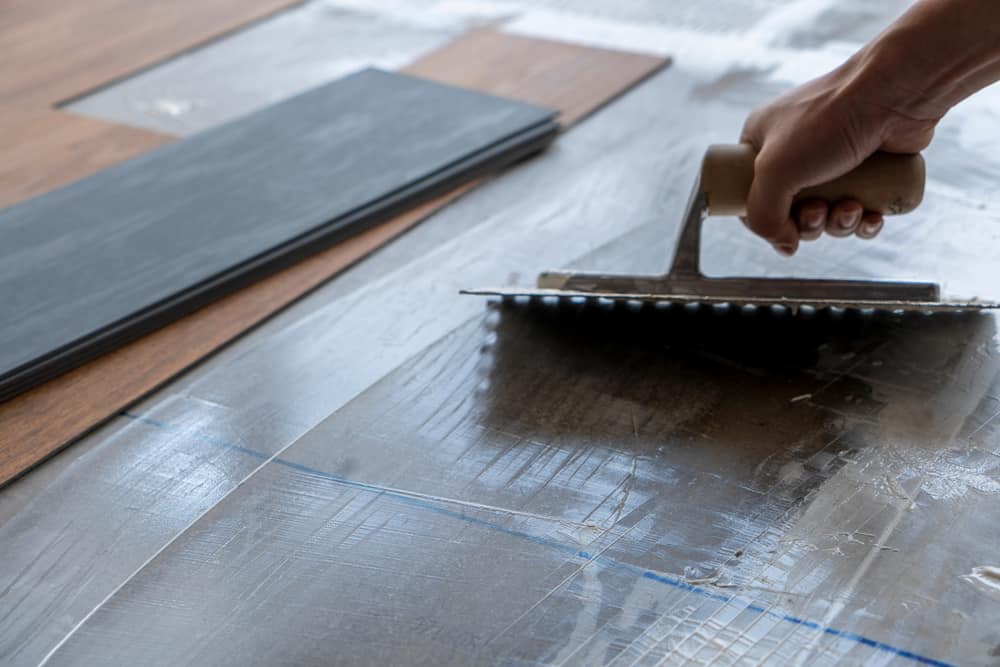
How to prepare a concrete floor for vinyl flooring?
When it comes to vinyl flooring, there are a few options to choose from: vinyl planks or tiles, luxury vinyl planks and vinyl sheets. Each option has unique characteristics and a different method of installation. You can learn more about the different types of vinyl flooring in this previous post.
Before installing your vinyl flooring, whether the subfloor of your work area is hardwood or concrete, one crucial step is to make sure the subfloor is level and clean. However, laying vinyl flooring over concrete requires a bit more preparation.
Prepare the subfloor
Repair cracks and holes
Inspect the floor and repair cracks, pits, holes, or other uneven patches. Use concrete filler or a similar floor patching compound to repair the damage. If the subfloors have large cracks, then the best course of action is to remove the large part of the slab and replace it with a new one.
Please note new concrete floors must be left to cure for at least 60 days before you can install vinyl planks over them.
Grind imperfections
The surface must also be as smooth and flat as possible. Make sure you sand down any uneven areas including humps, lumps, or bulges with sandpaper or an electric sander using a grit of 40 or 60. And once you’re done, take a damp rag and clean the remaining dust.
Wash the floor
Wash the concrete floor thoroughly using water and household detergent or degreaser. The floor should be free of greasy spots or built-up grime before you leave it to fully dry.
Conduct a moisture test
The moisture levels in concrete subfloors should be as low as possible before installing vinyl flooring. Here is a simple guide to test the moisture level yourself:
- Tape a small piece of scrap vinyl to your subfloor.
- Make sure the edges are properly sealed to prevent air from escaping.
- Leave the tape for exactly 3 days.
- After 3 days, try pulling the tape off the floor. If it comes off too easily, it means the moisture level may be too high for the application of vinyl. In such a case, the room should be dehumidified.
Apply the underlayment
An underlayment can create an extra vapour barrier above your subfloor and will also provide may added cushioning making the floor feel softer to walk on.
As always, when installing new vinyl flooring, follow the manufacturer recommendations specific to your product or contact a Parrys professional installer if you have any further questions.
Read More Blogs

About Ian Minotti
Ian is a renowned floor covering expert in product knowledge and installation. He is specialised in all types of floor coverings for many years and his knowledge in the industry is exceptional. Feel free to ask Ian any floor covering question you may have.
Article Topics
Recent Articles
-
![Parrys Carpets: All The Luxury. None Of The Upkeep]()
All The Luxury. None Of The Upkeep
Choosing flooring is one of those decisions that shapes how a home feels for years....
Keep Reading -
![Parrys Carpets: How Plank Width Changes Your Space]()
How Plank Width Changes Your Space
Wide planks are among the hottest trends in timber and timber-inspired flooring in 2026 and...
Keep Reading -
![Parrys Carpets: What “100% Waterproof” Really Means]()
What “100% Waterproof” Really Means
When you live in a busy household with kids, pets or a pool, waterproof floors...
Keep Reading